Slot trenching in Corpus Christi
Narrow trenches cut with water and a vacuum, for conduit, fiber and cable where a trencher could hit the lines already there.
A quote-request service, not a contractor. We pass your request to independent local operators who quote you directly.
What slot trenching covers
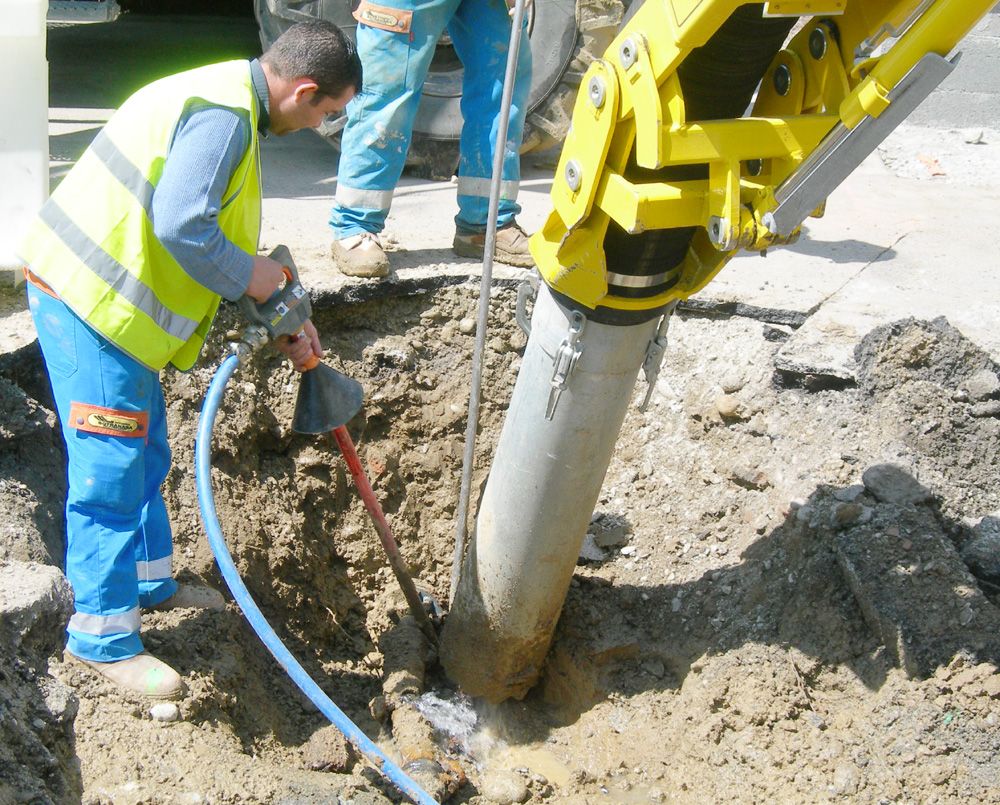
A slot trench, also called a vacuum trench, is cut the same way as a pothole: pressurized water breaks up the soil and a vacuum lifts it out. Instead of one hole, the crew works along a line.
Typical requests
- Conduit runs for power, lighting or controls beside existing lines
- Fiber and cable routes through crowded utility corridors
- Short connections between a handhole or vault and a building
- Crossings under or beside buried lines, where each line has to be seen
- Trenches along a fence, curb or slab where a machine can't fit
- Replacing a single failed run of cable or conduit
Width and depth follow what goes in the trench. Say what you are installing, and ask each operator how the trench is left: backfilled, plated, or open for your crew. Slot trenching often follows daylighting: test holes first, then the trench.
Trucks, water and spoil
The hydrovac truck
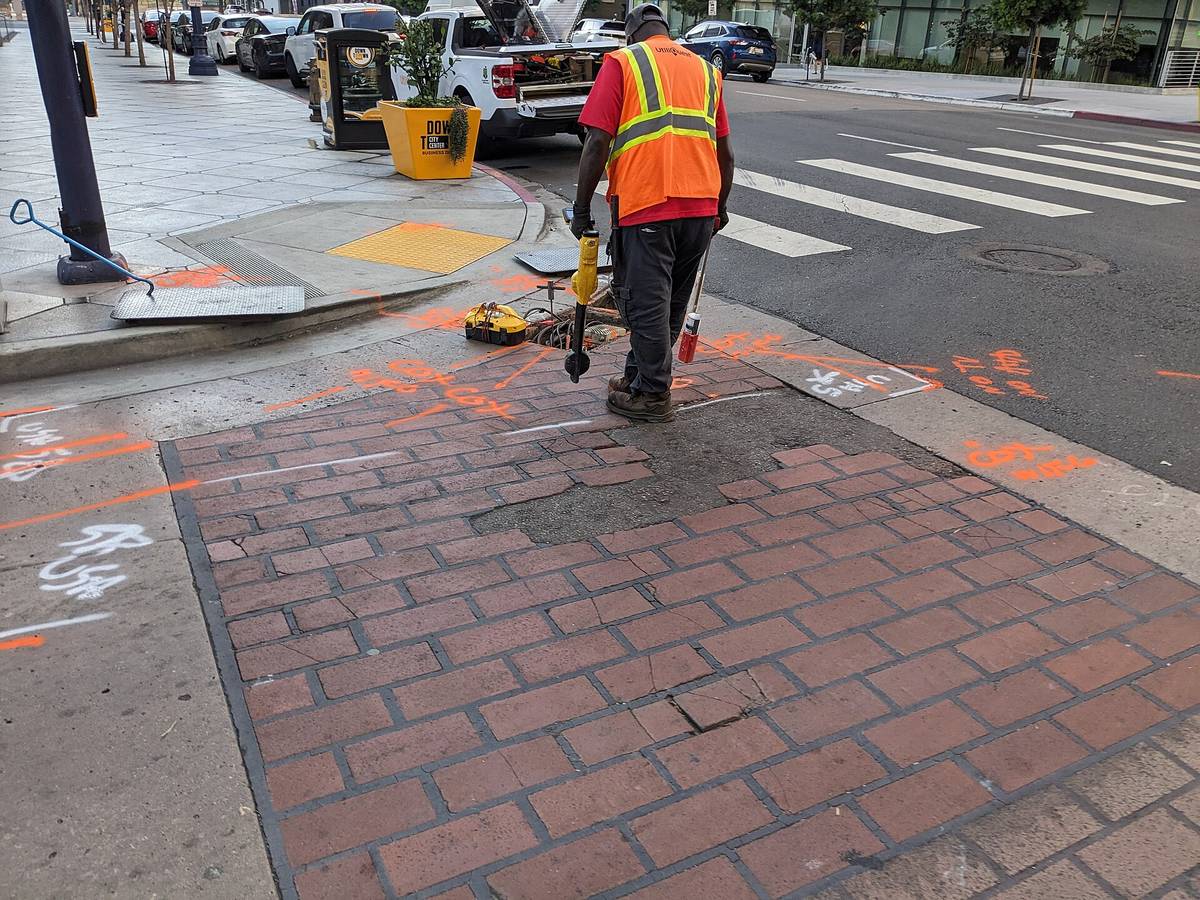
The same truck that digs a pothole: a water tank and pump feed a wand that cuts the soil, and a vacuum boom lifts it into a debris tank. On a long trench the tank fills often, so the number of dumps shapes the schedule.
Slurry to haul
Water-cut spoil comes out as slurry. A long run produces a lot of it, so hauling and disposal can add a good deal to the price. Say in the form whether any of it can stay on site.
Coastal Bend ground
Sand digs fast. Clay and caliche take longer and more water. Concrete or asphalt has to be cut or cored first, and someone has to restore it afterward. Say what is on top.
When it beats a trencher
- Crowded corridorsWhere gas, power, water and fiber share a few feet, a vacuum trench exposes lines as it goes instead of cutting blind.
- Many crossingsA route that crosses several buried lines needs each one seen. A slot trench uncovers them as part of the cut.
- Tight spaceBeside buildings, slabs and fences, a hose reaches where a trencher doesn't fit.
- Near plant and pipeline linesMany owners require vacuum or hand digging within a set distance of their lines. Ask the owner for the rule. See pipeline exposure.
- Narrow cutsA narrow trench leaves less surface to restore. Ask each operator what width they can hold for your conduit.
What to tell the operator
A trench is priced from its route. Give these and the quotes come back closer to the final bill.
| Detail | Why it matters |
|---|---|
| Route length | Sets the hours and the number of debris-tank dumps |
| Width and depth | Follow the conduit, duct or cable you are installing |
| Surface | Dirt, gravel, concrete or asphalt; pavement is cut before digging |
| Crossings | Every marked line the route crosses; each needs care and may need extra time |
| Soil | Sand, clay or caliche; harder ground is slower |
| Spoil | Hauled off or left on site; this changes the price |
| Traffic control | If the route is in a street or lot with traffic, say who provides it |
What to have ready
Operators price faster, and closer to the final bill, when these are in the request.
- A marked-up plan or drawing with the start and end points
- Route length, width and depth
- Your Texas 811 ticket number and its expiry date
- Photos of the locate marks along the route
- Surface type, and who restores it afterward
- What goes in the trench and when your crew installs it
- Where the spoil goes: hauled off, or left on site
- Site rules, access hours and a contact
811, pipelines and permits
Texas 811
Excavators generally must notify Texas 811 at least 48 hours before digging, not counting weekends and legal holidays. The call is free. If your job runs long, the ticket can expire: check the current rules and renew before it does.
Crossings and damage
Mark every line your route crosses and tell the operator. If a pipeline is damaged in any way, the excavator must notify the pipeline operator and Texas 811. Stop work near the damage and keep people back.
City streets
Digging in a Corpus Christi street or right-of-way can need a city permit. Ask the City of Corpus Christi which permit applies before you schedule the truck.
Plants and terminals
Facility rules sit on top of state law: orientation, safety pre-qualification, insurance certificates and work permits. The operator you hire has to meet them, so put them in the request.
When can you dig?
Texas 811 generally needs at least 48 hours' notice before you dig, and weekends and legal holidays don't count. Enter when you call to see the earliest usual start.
Earliest usual start
Example: call on a Thursday at 10 a.m. and the earliest usual start is Monday at 10 a.m. If a legal holiday falls inside the window, add a business day. This is a planning aid, not legal advice: Texas 811 and the line owners have the final word, and tickets expire on long jobs, so renew before yours runs out.
Slot trenching questions
What is slot trenching?
Cutting a narrow trench with pressurized water and a vacuum instead of a bucket or trencher. It is also called vacuum trenching. Crews use it to lay conduit, fiber and cable close to buried lines.
Is slot trenching the same as potholing?
It uses the same truck and method. A pothole is one hole to see one line; a slot trench is a continuous narrow cut along a route. Many jobs use both: test holes first, then a trench.
How deep and how long can a slot trench be?
That depends on the truck, the soil and the operator. We have no confirmed limits to publish, so give your route length and depth in the form and ask each operator what they can do.
Do I need an 811 ticket for a trench?
Yes, in general. Texas 811 needs at least 48 hours' notice before you dig, not counting weekends and legal holidays. Give the ticket number to the operator, and renew it if the job runs long.
What does a slot trench cost?
Published guides put hydrovac work at roughly $200 to $450 an hour, and day rates around $3,500 to $4,500, as typical market ranges. These are not our rates, and operators can quote outside them. A trench price depends on route length, depth, soil, surface, spoil disposal and travel. Operators quote you directly.
Price your trench
Slot trenching is already picked. Add the town, route length, depth and your 811 status.
We pass your request to independent local operators who quote you directly. We don't own trucks or do the digging.